New for 2026: Spend & Save. The more you spend, the more you save.

Price Range:

£15k–£25k

March Featured Design: Metallic Blue Handleless Kitchen with Open-Plan Breakfast Bar

For March 2026’s featured kitchen, I was asked a simple but important question: in a 1960s home, do you choose a traditional Shaker door or go for a very modern high-gloss look?
Unlike listed or thatched properties where Shaker or in-frame Shaker is often the natural choice, a 1960s build can suit either style. This project became about helping the client visualise both routes clearly, then refining the final selection so it delivered a real “wow” change in both look and layout.

Highlights

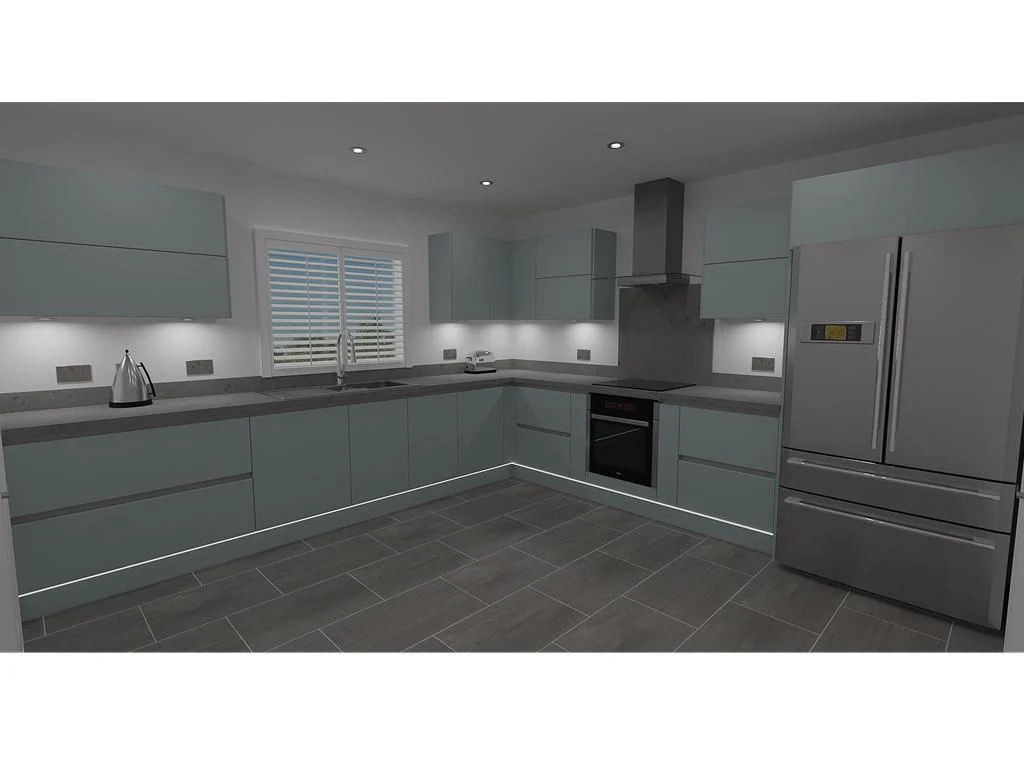
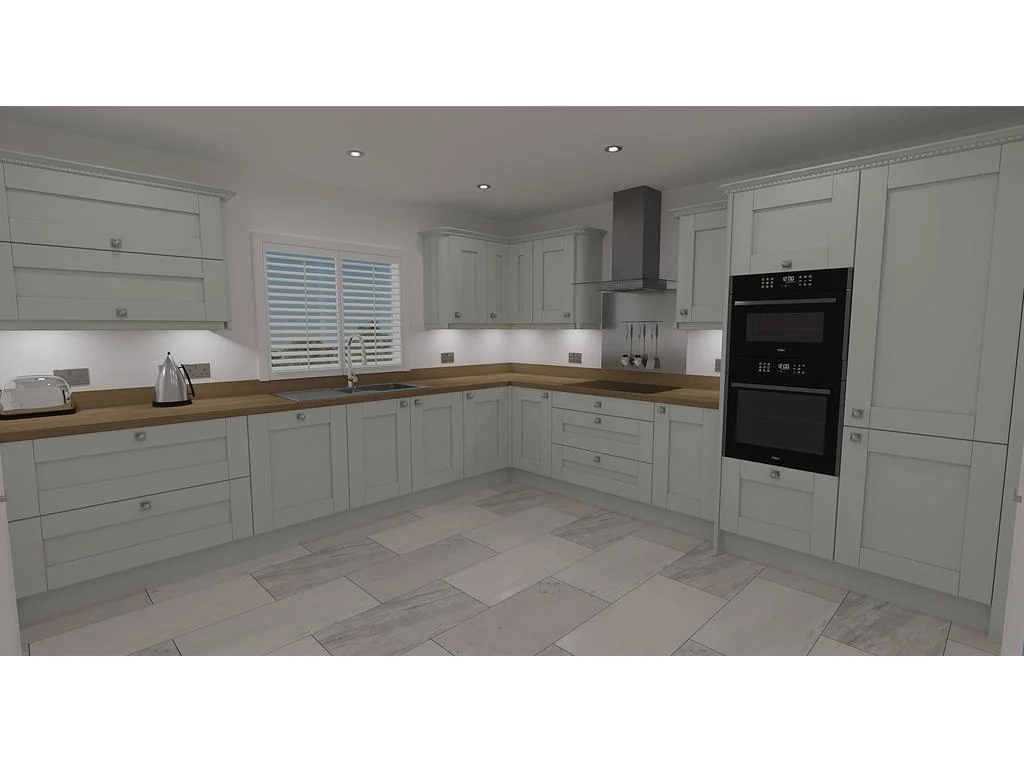
Two full concept routes designed: Traditional Shaker vs Modern Ultra Gloss
Modern design refined from an in-rail handless concept to a cleaner, more suitable solution
Supporting side wall removed to create a larger open-plan space
Breakfast bar added, made possible by the new layout and available budget
Corner wall cabinets changed to open corner storage for a lighter, more modern feel

How the project came together

The starting point was style direction. The client wanted to know whether a 1960s home should lean traditional or modern, so we created two complete design options to compare properly:

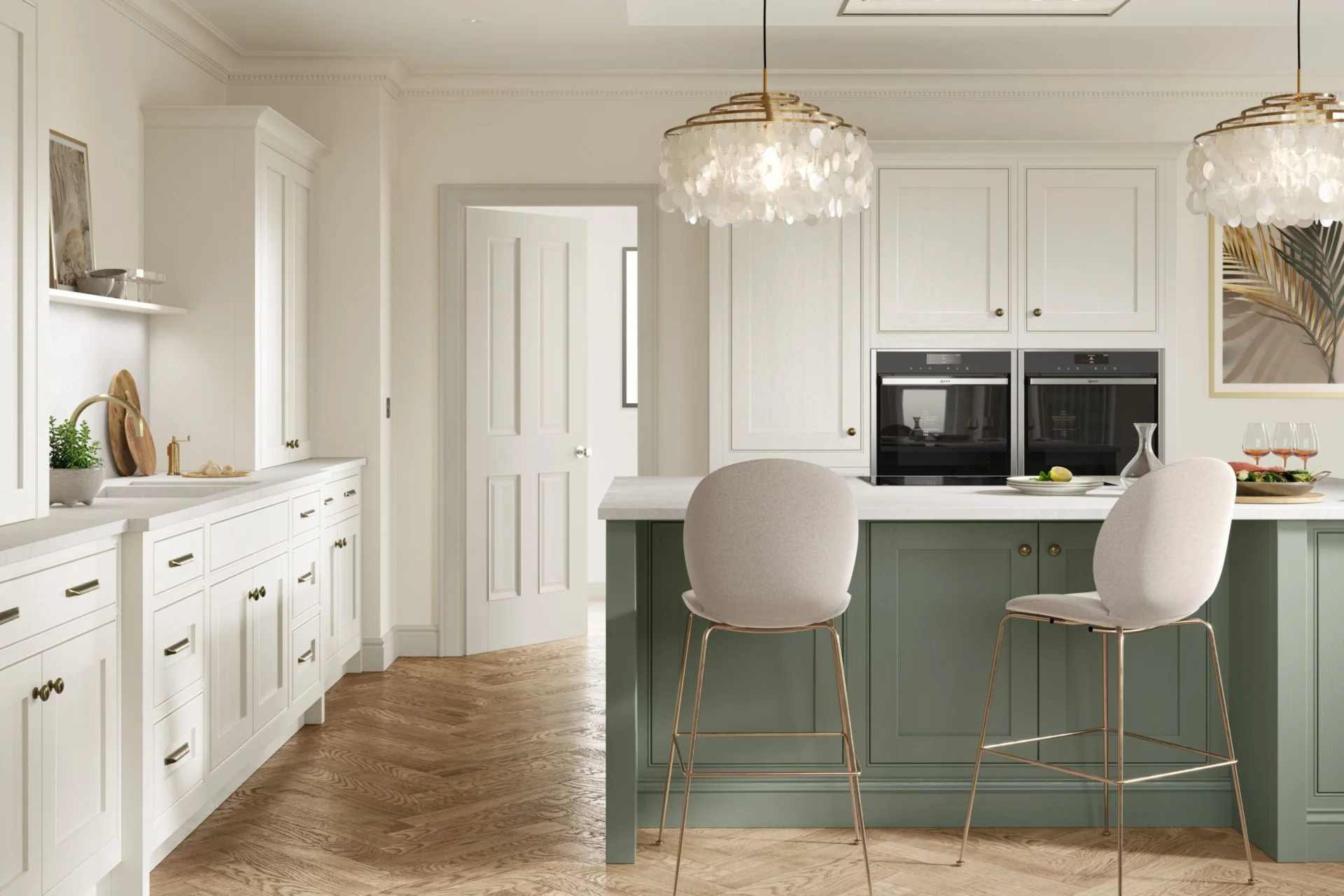
  • Option 1 (Traditional): Shaker door in a 20mm solid oak frame, painted Chalk White, finished with a Wellington chrome knob and plate handle set.

  • Option 2 (Modern): 18mm MDF Ultra Gloss Metallic Blue, designed to feel sleek and contemporary using PET/PVC gloss materials.

Both routes were liked equally, so we guided the decision using a simple principle: choose the style you don’t already have. If your current kitchen is Shaker, go modern. If it’s modern now, go Shaker. Combined with the new layout changes, the chosen route would feel like a true transformation rather than “more of the same”.

As the modern design developed, the original metal in-rail handless system began to feel too much for the space and the overall budget, even though the client loved the handless look. We kept that clean, handleless feel but refined the solution by switching to a J-Profile door style.

With budget available, the builders were also able to remove a supporting side wall, opening up the room for open-plan living and creating enough space for a breakfast bar, which had always been on the wish list if space allowed. Finally, we changed the corner wall cabinets to open corner storage, keeping the kitchen feeling more open and less boxed-in.

What changed from initial to final

Handless approach changed from metal in-rail system to J-Profile Supporting side wall removed to increase space and create an open-plan feel Breakfast bar added once the layout allowed it Corner wall cabinets changed to open corner storage

Materials Used

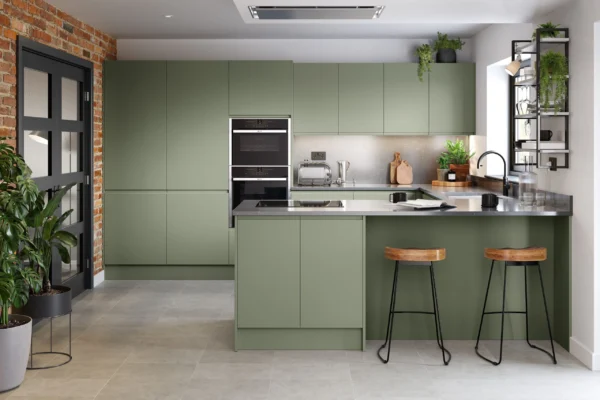
Door Type: 18mm MDF Ultra Gloss slab door (modern route), finalised with a J-Profile handless style.
Colour & Finish: Metallic Blue ultra gloss, using melamine acrylic PET and PVC materials to achieve a strong, reflective gloss finish.
Worktop: Concrete-look grey worktop.
Handles: Originally designed with an in-rail handless system (flush handrail built into the cabinetry). Final design changed to J-Profile to keep the handless look without the metal rail system.
Sink & Taps: Stainless steel inset sink Chrome swan-neck mixer tap
Appliances: Induction hob (black glass) Built-under single oven (black glass) Chimney extractor hood (stainless steel) American style fridge freezer (stainless steel)

ARTICAD DESIGNS

Book a design chat

Structural changes (removing a supporting wall) can include engineering, steelwork if required, making good, electrics, plastering, and flooring continuity. Worktop choice swings the price heavily, especially if quartz or porcelain is chosen versus laminate. Appliance brand tier makes a big difference, particularly with an American style fridge freezer and induction setup. Final budget assumes normal access and no major surprises on strip-out.

See our Kitchens

Scroll to Top